Team: Vishwa Anand, Vishal Yalla (Part 3)PART 1
Countries:
- Mexico
- Canada
- Germany
Table Data Reference to World Bank Indicators:
Balance of trade: (Terms of Trade Adjustment constant LCU)
Current Account: (Current Account Balance BoP Current US $)
Capital and Financial Account: (Net Financial Account BoP Current US $)
BOP: (Current Account + Capital/Financial Account $)
World Bank Data Table
| Trade Metric | 1 ($) | 2 ($) | 3 ($) |
|---|---|---|---|
| Balance of trade | -191028846514.061 | 115784632059.517 | -82677874122.9812 |
| Current Account | -18045572439 | -6654339568.48734 | 172458686427.476 |
| Capital and Financial Account | -14892502734 | -5533527856.76372 | 243725747840.112 |
| BOP | −32938075173 | −12187867425.25106 | 416184434267.588 |
PART 2
Trade Barriers:
Policies that governments, or public authorities, implement to alter the competitiveness of imported goods or services by making local goods and services more preferential. Such measures are tariffs, quotas, and other restrictions which are based on the principle of regulation.
Quotas:
It means establishing a maximum level of a particular product that can be imported to a certain country within a given period of time. Once this quota is attained it means that no importation of that good can be done beyond the set quota.
Tariffs:
Levies put on imported products. They affect the prices of imported products by making them to cost more than the locally manufactured products.
What effect do tariffs and quotas have on trade?
While Tariff and quotas have been used as barriers to the penetration of foreign products into the domestic market, they act to the disadvantage of consumers by raising the price of the products and may provoke retaliatory measures from trading partners. Their negative impact includes also negative effects on the market by decreasing the amount and diversification of products. These barriers mount over time and may influence relations between countries in a negative manner and or overall global trade.
PART 3
G20 Country: United States
One-Pager: Trade Barriers and Economic Policy in the United States
Trade Policy Overview
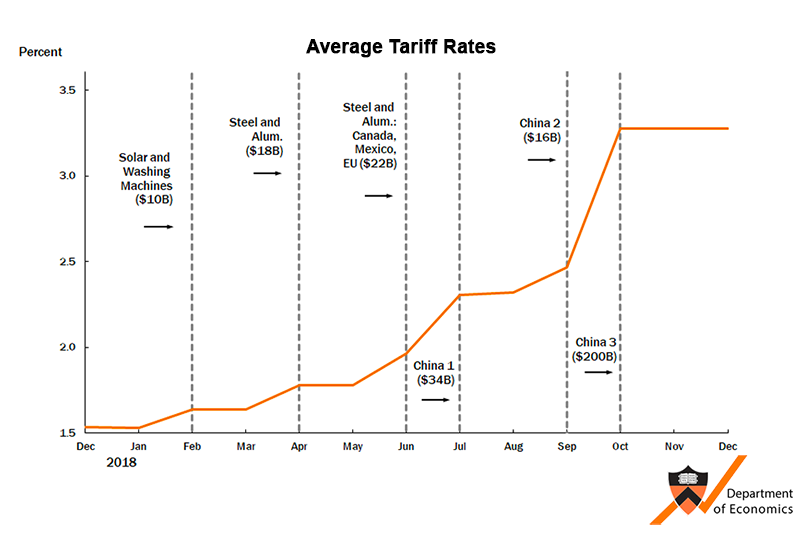
The tariffs and quotas policy of the US can further be looked at in terms of different tariff quotas for the same country or commodities, most favoured nation tariffs and quotas, American selling price and American buyers price. The current administration has acted more protectionist in their policy approach not only by levying tariffs on imports from strategic partners like China, the EU, and Mexico. However, the US itself has a free trade agreement with twenty other countries due to the settlement of trade and eradicating barriers.
Current Situation with Tariffs and Quotas
Question
What is the current situation in this country with tariffs and quotas? If a published list of existing tariffs and quotas exists, include it. If not, summarize the information you have found through your research.
Summary:
The US currently has set various tariffs on imported goods into the country. These tariffs are part of protectionist trade politics intended to support local industries and answer other nations’ trade behaviors. These are; the ones that cover steel and aluminum which were initiated under Section 232 of the Trade Expansion Act of 1962 on grounds of security. While not as frequently used as tariffs, quotas are still present in today’s protectivism tools used in relations between countries. For instance, there are quantitative restrictions as to imports of sugar, dairy products and specific types of textiles. These quotas are meant to shield the local industries by restricting the imports market share of global commodities. The U.s International Trade Commission which is abbreviated as USITC offers information on tariffs as well as quotas. Today the list of all tariffs that are applied to imported goods can be seen on the Harmonized Tariff Schedule (HTS) of the United States. They give information on Agricultural Import Quotas in accordance to the USDA.
The United States maintains a complex system of tariffs and quotas. As of the latest updates, the U.S. has imposed tariffs on various goods, including steel and aluminum, as well as a range of Chinese imports under the Section 301 investigation. Key points include:
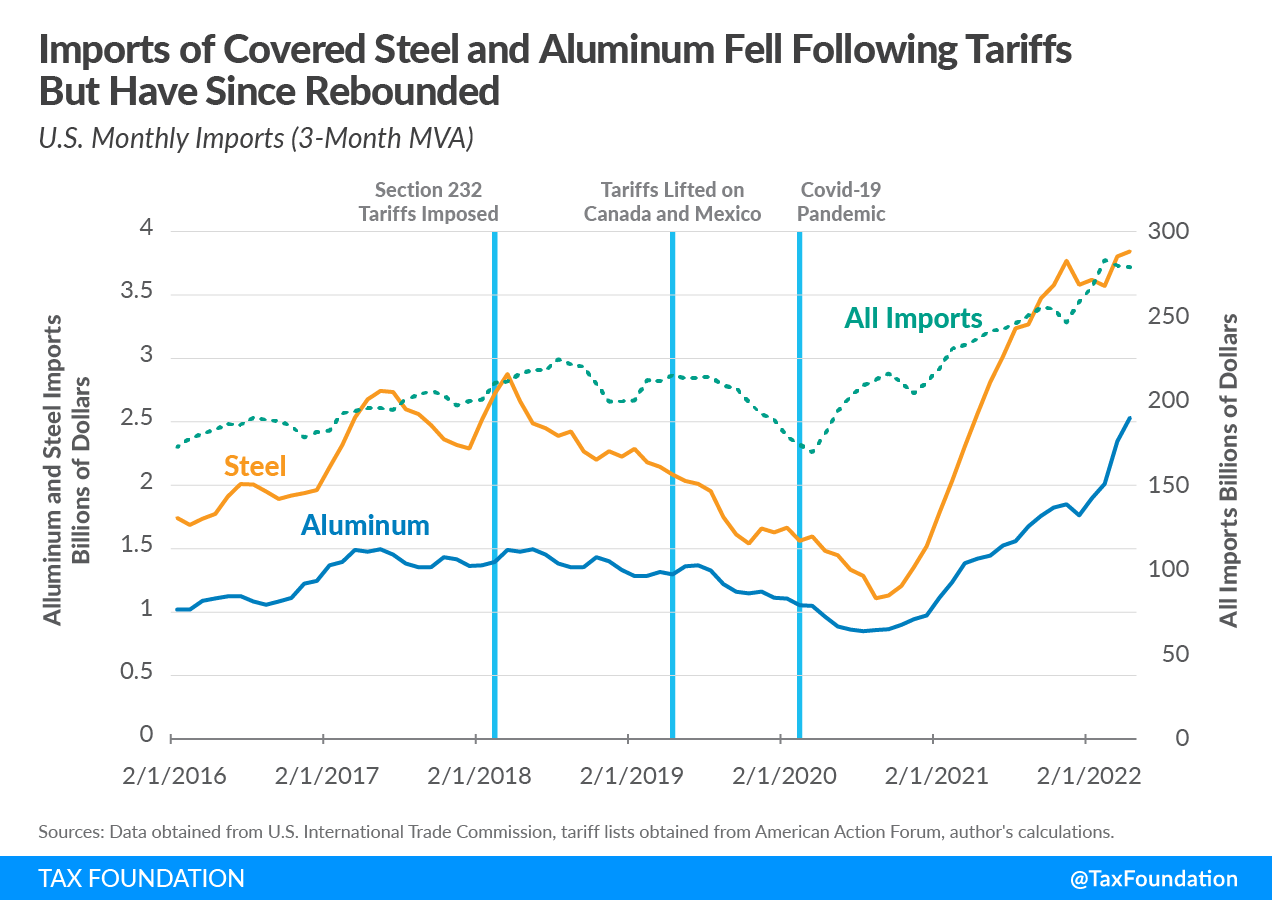
- Steel and Aluminum Tariffs: Introduced under Section 232 of the Trade Expansion Act of 1962 for national security reasons. Current tariffs are 25% on steel and 10% on aluminum.
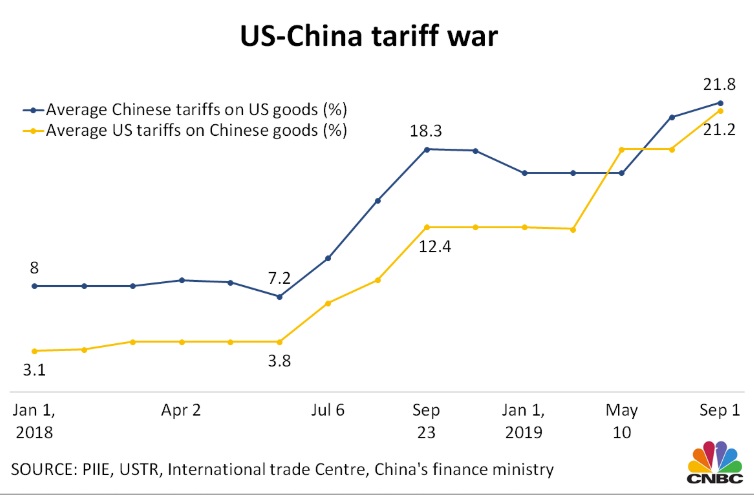
- China Tariffs: Implemented in several tranches starting in 2018 under Section 301 of the Trade Act of 1974, targeting over $350 billion worth of Chinese goods.
- Agricultural Quotas: Specific quotas on sugar, dairy products, and some meat imports are maintained to protect domestic industries.
Historical Trade Policy Shifts (1999-2024)
Question
Research the historical situation of this country and its trade policy. Go back as far as 25 years and provide the highlights of when the trade policy changed and explain why. What global event was happening that caused policymakers to change course?
Key Global Progressions Influencing Trade Policy
- 1990s: Expansion of globalization and the rise of multinational trade agreements.
- 2008: Global financial crisis impacting trade and economic policies worldwide.
- 2018-2019: U.S.-China trade war, significantly altering trade dynamics.
- 2020: COVID-19 pandemic disrupting global supply chains and trade flows.
Key Milestones
- 1999-2001: WTO Entry and Free Trade Agreements
- U.S. supports China in the World Trade Organization (WTO) in 2001.
- Free Trade Agreements (FTAs) with Jordan (2000), Singapore (2003), and Chile (2003)
- 2002-2009: Protectionist Measures and FTAs
- 2002: Steel tariffs imposed by President George W. Bush under Section 201, they are removed in 2003 after WTO ruling.
- 2004: Central America-Dominican Republic Free Trade Agreement (CAFTA-DR) signed.
- 2007: Peru Trade Promotion Agreement signed.
- 2008: Reevaluation of trade policies to protecting domestic jobs and industries.
- 2010-2016: Pivot to Asia and Trade Agreements
- 2012: South Korea-U.S. Free Trade Agreement (KORUS FTA) enters into force.
- 2015: Trans-Pacific Partnership (TPP) signed.
- 2017-2020: America First Trade Policy
- 2018:U.S. imposed significant tariffs on Chinese goods, leading to a trade war
- 2019: U.S.-Mexico-Canada Agreement (USMCA) signed, replacing NAFTA.
- 2021-2024: Focus on Domestic Manufacturing and Strategic Trade Alliances
- Continued tariffs on Chinese goods.
- 2023: Biden administration pushes for strategic alliances with European and Indo-Pacific partners.
- The Biden administration address global supply chain issues exacerbated by the COVID-19 pandemic.
Current Economic Activity & Its Impact
Question
Find a recent news article that discusses current economic activity in this country that is affecting any of the measurements in the table from Part 1. Discuss the significance of this situation and what economists predict will happen as a result of this activity.
Recent Economic Activity: An article in The Wall Street Journal published in April of 2024 address some of the problems created by persistent tariffs to US manufacturing industry. The article also focuses on the fact that though tariffs have been beneficial in preserving some industries locally, it has also raised the costs for manufacturers that procure their materials internationally. If these tariffs are maintained then economists have forecasted higher consumer prices and possible disruption of the supply chain.
Significance: The constant imposition of tariffs and its effects on manufacturing industries in the United States affects Mexico in a big way. Foreseen risks for the Mexican exports and stability include higher cost for the U. S manufacturers to purchase inputs, disruption of supply chain, and a rise in prices for the final consumers. Economic forecast is anticipations of short-run problems and longer-run responses that could lead to modifications in policies that will improve the trade relation and the overtures for integration between the U. S and Mexico.
Recommendations for U.S. Trade and Economic Growth
Question
What recommendations do you have for this country in regards to trade and economic growth?
- Pursue Balanced and Transparent Trade Policies:
- Encourage fair competition in the marketplace, but do not overly protect these industries to avoid a negative effect on consumers and the home-country economy.
- The customer tariffs should be reviewed and overhauled frequently in a bid to fulfil their desired objectives without adverse impacts.
- Strengthen the policymaking process by focusing on transparency and consistency of the enacted trade rules, so as to create more certainty for businessmen and investors.
- Strengthen and Diversify Trade Agreements:
- Strengthen the current trade relations and search for the new ones and increase market openings for the American exports and expand the economic cooperation.
- Conduct more trade activities with Africa; Southeast Asia; and Latin America.
- It is necessary to negotiate new trade treaties that reflect the up-to-date realities, in particular digital trade and environmentally friendly technologies.
- Invest in Domestic Competitiveness and Innovation:
- To promote competitiveness of the U. S. industries, support and fund research and development initiatives.
- Offer special tax treatments and give direct subsidies in the form of grants for R&D on constrained technologies and industries including technology manufacturing, semiconductors, and renewable energy.
- Build a stronger and more skilled workforce to help the Country lessen dependency upon imports of goods in key industries.
- Promote Sustainable and Resilient Trade Practices:
- Discussed the necessity to add environmental factors into trade frameworks to address climate change as the following:
- Therefore, one should support state initiatives to minimize carbon impact through trade reforms.
- exhort those industries not to rely solely on the different sources of supply that are based on the ICs as this subjects them to disruption from the internationa l sources of supply.
- Collaborate on Global Economic Challenges:
- Collaborate with other countries tackle global issues that affect growth and development such as disruption of supplies and climate change.
- Ensure alliances cooperate and come up with multiple sources and structures for supply chains.
- New approaches should be sought to build stock of the strategic materials to improve supply chain reliability.
Works Cited
MLA Citations
”G20 in Focus.” Boell.de, 2016, [www.boell.de/en/2016/11/30/what-world-group-twenty-g20-interactive-infographics-and-comparative-maps]. Accessed 23 May 2024.
”G20 - Group of Twenty - BMUV.” Bmuv.de, [www.bmuv.de/en/topics/international/g20-group-of-twenty]. Accessed 23 May 2024.
”G20 Rome Leaders’ Declaration - Bundesregierung.de.” Bundesregierung.de, 31 Oct. 2021, [www.bundesregierung.de/resource/blob/975254/1980568/5444974baf6d1f86c98de990757d580c/2021-10-31-g20-erklaerung-englisch-data.pdf?download=1]. Accessed 23 May 2024.
”About G20.” G20.in, [www.g20.in/en/about-g20/about-g20.html]. Accessed 23 May 2024.
”FACT SHEET: Delivering an Ambitious Agenda for the G20.” The White House, 9 Sept. 2023, [www.whitehouse.gov/briefing-room/statements-releases/2023/09/09/fact-sheet-delivering-an-ambitious-agenda-for-the-g20/]. Accessed 23 May 2024.
United States Trade Representative (USTR). (2023). “Current U.S. Tariffs and Quotas”. Retrieved from USTR.gov. Accessed 23 May 2024.
The Wall Street Journal. (2024). “U.S.-China Trade Tensions and the Semiconductor Industry”. Retrieved from WSJ.com. Accessed 23 May 2024.
International Trade Administration (ITA). (2023). “Historical U.S. Trade Policies”. Retrieved from Trade.gov. Accessed 23 May 2024.
Office of the Historian, U.S. Department of State. (2023). “Milestones in the History of U.S. Foreign Relations”. Retrieved from History.state.gov. Accessed 23 May 2024.
U.S. International Trade Commission. “Harmonized Tariff Schedule of the United States.” [https://hts.usitc.gov] Accessed 23 May 2024.
U.S. Department of Agriculture. “Agricultural Import Quotas.” [https://www.usda.gov] Accessed 23 May 2024.
The Wall Street Journal. “Impact of Tariffs on U.S. Manufacturing.” April 2024. [https://www.wsj.com] Accessed 23 May 2024.
“The Impact of the 2018 Tariffs on Prices and Welfare | Princeton University - Department of Economics.” Department of Economics - Princeton University, 4 June 2019, [https://economics.princeton.edu/working-papers/the-impact-of-the-2018-trade-war-on-u-s-prices-and-welfare/]. Accessed 23 May 2024.
“Forex - These 4 Charts Show How US-China Trade Has Changed during the Tariff Dispute | Market Overview.” FxPro News, [https://fxpro.news/market-overview/these-4-charts-show-how-us-china-trade-has-changed-during-the-tariff-dispute-20190918/]. Accessed 23 May 2024.
Durante, Alex. “How the Section 232 Tariffs on Steel and Aluminum Harmed the Economy.” Tax Foundation, 20 Sept. 2022, [https://taxfoundation.org/research/all/federal/section-232-tariffs-steel-aluminum/]. Accessed 23 May 2024.